
SpaceX: Navigating Post-IPO Challenges
ED
Editorial
Cashu Markets·5 min read
TL;DR
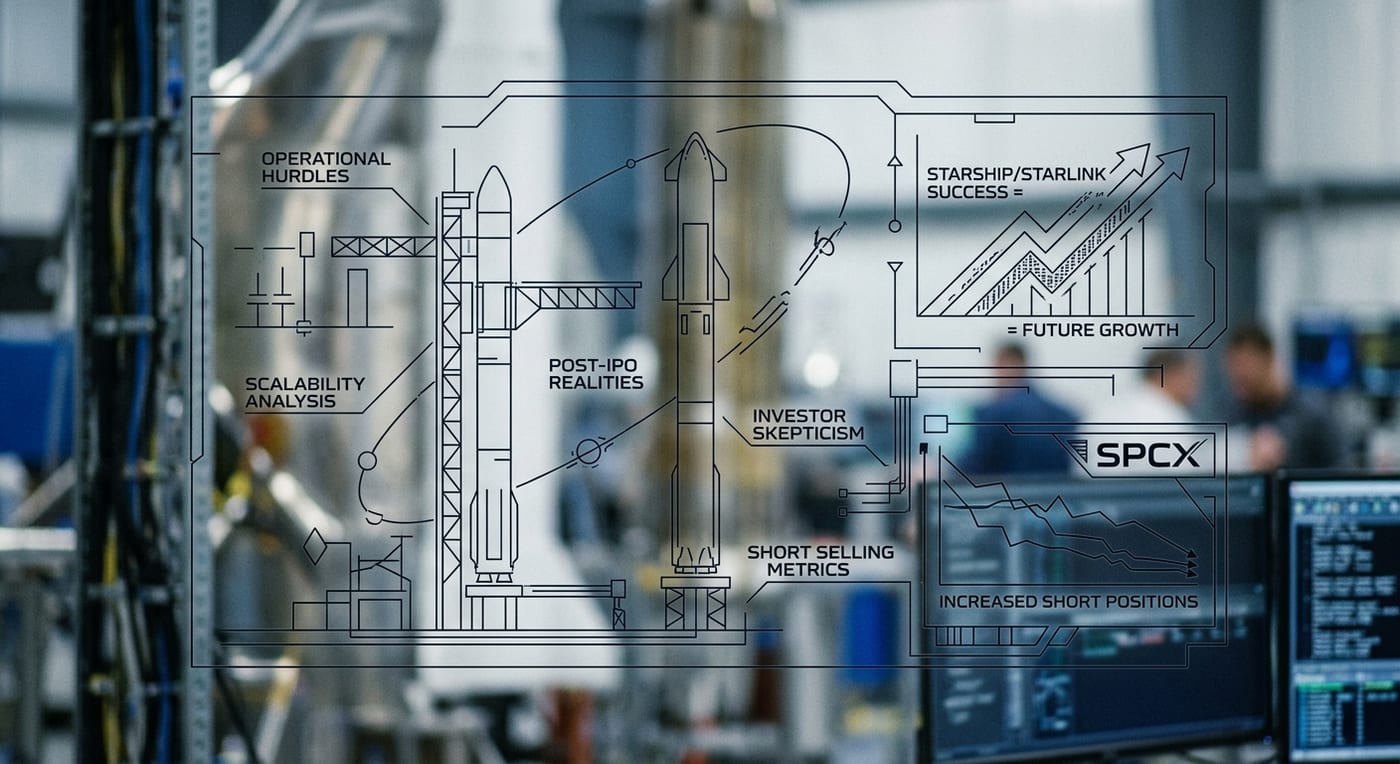
- SpaceX faces operational challenges post-IPO.
- Short selling has escalated, reflecting investor skepticism.
- The success of Starship and Starlink is crucial for future growth.
Space Exploration Technologies Corp. ( SPCX) has moved into a challenging period following its record-setting initial public offering (IPO) on June 12, 2026. The event raised a staggering $85 billion, setting the stage for strong ambitions in the aerospace sector. However, recent developments indicate that the road ahead may be fraught with volatility, as market dynamics, operational setbacks, and growing short-seller activity threaten to unsettle investor confidence.
A Tumultuous Debut
The IPO left SpaceX with a market capitalization of approximately $1.8 trillion, but this meteoric rise has been accompanied by significant stock price fluctuations. Initially soaring to an all-time high of $225, the stock has retreated sharply, settling close to its IPO price of $135. This steep decline has raised critical questions among investors regarding the company's long-term viability and growth trajectory. Analysts are assessing the underlying factors, especially given the common trend of IPOs experiencing volatility in their early trading days.
Operational Setbacks Impacting Performance
A particularly significant event impacting the sentiment around SpaceX occurred recently when the company had to abort a crucial test flight of its Starship rocket due to ignition failure. The cancellation, described by CEO Elon Musk as a setback, underscored the technical and operational challenges that the company is grappling with.
As SpaceX aims to demonstrate the capabilities of its advanced rocket systems, any delays or failures can instigate negative reactions in the stock market. Such incidents are especially sensitive post-IPO when investor sentiment is still fragile. Following the aborted flight, SpaceX's shares fell further, indicative of how closely market dynamics correlate with the company's operational performance.
Short Sellers and Market Sentiment
Market sentiment surrounding SpaceX is currently compounded by a rising trend of short selling. Reports indicate that short positions have ballooned to encompass nearly a third of the company's public float, reflecting a significant bearish outlook among some investors. This mounting short interest highlights both skepticism regarding SpaceX's lofty valuation and concerns over its operational execution.
As short sellers accelerate their positions, the possibility of increased stock availability in the upcoming months—related to the expiration of lockup periods—adds another layer of uncertainty. Investors are keenly watching for the potential impact of heightened selling pressure on stock prices as early investors and employees are permitted to liquidate their holdings.
Economic Viability and Future Potential
Despite the challenges, the foundation of SpaceX’s valuation rests on two monumental pillars: its Starlink project and its ambitious plans for the Starship program. While the company has already made significant strides with Starlink, generating over $11 billion last year, the quest to dramatically scale its satellite internet offerings is ongoing. SpaceX has filed with the U.S. Federal Communications Commission to deploy up to 100,000 next-generation Gen3 satellites, a move that could exponentially enhance network speed and capability.
The success of these ambitious plans, however, hinges on overcoming substantial manufacturing and logistical hurdles. The current pace of satellite production at SpaceX would require over 27 years to fulfill the proposed rollout of 100,000 satellites, pushing the company to fundamentally rethink its operational efficiencies to meet its targets.
Starship: The Key to Cost Competitiveness
Starship stands at the core of SpaceX's strategy to reduce customer costs and expand into new markets. The next-generation rocket is expected to significantly lower the per-kilogram costs for launching payloads into space—from approximately $2,720 per kilogram with the Falcon 9 to potentially below $100 with Starship. However, achieving these costs requires successful implementation of a substantial number of launches with rapid turnaround times, something still unproven at scale.
The upcoming 13th test flight of Starship has been positioned as a critical milestone for the company. A successful launch will not only help restore investor confidence but will also showcase SpaceX's capability to address existing technical challenges and pave the way for upcoming missions. Analysts emphasize that the implications of this flight extend beyond immediate operational outcomes, affecting investor perspectives on the long-term feasibility of SpaceX's cost-reduction strategies.
Navigating Investor Expectations
As SpaceX maneuvers through this period of uncertainty, the broader context of market dynamics—including investor expectations surrounding high-growth tech stocks and concerns related to AI trends—will play a pivotal role. While some analysts argue that the company sustains a solid foundation for future growth, the erosion of public confidence could challenge this positioning.
The volatility encapsulated within SpaceX’s post-IPO landscape prompts stakeholders to reassess not only the company’s operational trajectory but also how it communicates progress towards its ambitious objectives. Investors are eager for clarity regarding SpaceX's ability to move beyond the current challenges and leverage its market potential in the coming years.
As the company embarks on its recovery journey, the lessons gleaned from historical IPO performances and the underlying financial and operational metrics will guide both analysts and investors. They will need to stay vigilant, carefully weighing the potential for long-term disruption against the near-term realities affecting share performance. Ultimately, Space Exploration Technologies Corp. stands at a critical juncture; how it navigates through this will be indicative of its future trajectory in the evolving aerospace and technology landscape. The same pressure is reflected in recent reporting on the issue, which helps explain why the company's pricing decisions remain under scrutiny.