
Tesla's Autonomous Future: Cybercab Insights
ED
Editorial
Cashu Markets·5 min read
TL;DR
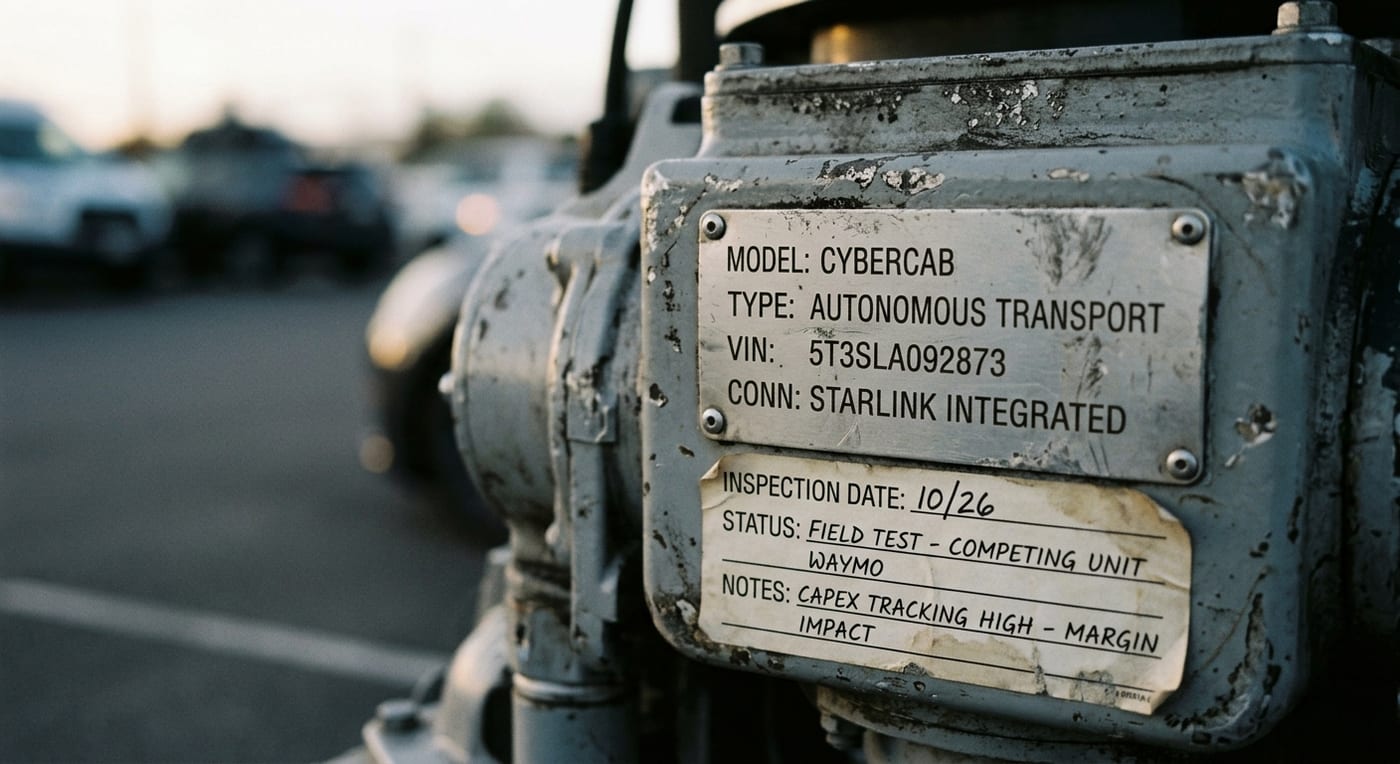
- Tesla integrates Starlink in Cybercab for connectivity.
- Competition with Waymo intensifies in robotaxi space.
- Rising capital expenditures pose challenges to profit margins.
Tesla, Inc. (TSLA) is accelerating its journey into the world of autonomous vehicles with the much-anticipated Cybercab robotaxi, a move that highlights its commitment to innovation and connectivity. Positioned as a critical element in Tesla's broader efforts to establish leadership in the burgeoning robotaxi market, the Cybercab integrates advanced technology from SpaceX's Starlink to enhance user experience and service reliability.
A New Era of Connectivity
The recent announcement regarding the integration of Starlink into Tesla's Cybercab fleet presents not only a technical marvel but also an in-depth business strategy poised to enhance the viability of autonomous transportation. As Tesla's CEO Elon Musk pointed out, an uninterrupted internet connection is vital for autonomous vehicles to function effectively, particularly in areas where cellular coverage can be spotty. With the integration of Starlink’s satellite internet capabilities, Tesla can ensure that its Cybercabs remain operational at all times, avoiding potential issues where vehicles could be ‘missing in action’ due to lack of connectivity. This advancement is crucial as Tesla prepares for an expanded launch of its driverless services.
Integrating systems from sister companies is a hallmark of Tesla's strategy. SpaceX's acquisition of Tesla's Megapacks and the collaborative developments in AI give Tesla a technological edge that not only enhances its vehicles’ capabilities but also reinforces the synergy between the two enterprises. As seen during recent production updates, the robustness of Tesla's relationship with SpaceX could bode well for the rollout of driverless services across various markets.
Scaling Competition: Tesla vs. Waymo
As Tesla ramps up its efforts with the Cybercab, it faces fierce competition from Waymo, whose rapid expansion is evident from recent reports. Videos emerging from locations like Dallas and Arizona show Waymo intensifying its operations with significant fleets of retrofitted vehicles. Interestingly, Tesla's approach differs slightly, as the Cybercab is a purpose-built robotaxi without traditional controls, further signifying its commitment to full automation. The competition between Tesla and Waymo isn't just about vehicle development, but also about who can deliver a functioning, reliable autonomous service first.
Last month, Tesla confirmed that it had over 100 Cybercabs under production ready for public testing. The company’s commitment to its ambitious timelines for the Cybercab service is bolstered by ongoing site preparations and engineering test drives.
The Driving Force Behind Tesla's Robotaxi Ambitions
The delivery numbers reported by Tesla in Q2 2026, showcasing a notable 25% year-over-year increase, reflect strong consumer interest, especially in vehicles like the Model 3 and Model Y, which continue to represent Tesla's core offerings. However, the urgency to advance in the robotaxi sector indicates Tesla’s strategy to diversify revenue streams beyond traditional car sales. The potential for stable, recurring revenues from robotaxi services suggests that Tesla is shifting its business model to adapt to changing market dynamics, much like the integration of Full Self Driving (FSD) subscriptions which have shown promise in enhancing revenue without a significant increase in vehicle production.
This transition towards a multifaceted business model aligns with growing demands for electric alternatives in the automotive sector. Consumers are increasingly aware of their environmental impact, and Tesla's advancements in robotaxis could serve to retain and broaden its customer base. With the integration of next-generation connectivity, Tesla's offerings not only become more appealing but also more indispensable in future urban transport landscapes.
Future Challenges and Opportunities
Despite the optimism surrounding Tesla's advancements, there remain considerable challenges. Rising capital expenditures necessitated by ambitious innovation projects strain profit margins, leading analysts to scrutinize how these expenditures will affect long-term profitability. While Tesla's deliveries are robust and demonstrate a sustainable demand for its vehicles, margins under pressure could dictate strategic pivots in the near future.
Moreover, the competitive landscape in the EV and autonomous vehicle sectors only intensifies the pressure. Companies like BYD and Rivian have set ambitious growth targets, challenging Tesla's dominance and leaving little room for complacency. As competitors ramp up their offerings, Tesla must not only maintain its production levels but also invest wisely in R&D to stay ahead in the race.
Adapting to Market Dynamics
As Tesla ventures deeper into the automated future with the Cybercab, the impact of macroeconomic factors, such as inflation and rising oil prices, could also influence its strategic decisions. These shifts in the economic environment often influence consumer spending and can affect the acceptance of autonomous vehicles in certain demographics. The success of Tesla's transition to a robotaxi service will hinge not just on its technological advancements but also on how effectively it navigates these dynamic market conditions.
In conclusion, Tesla's foray into the autonomous vehicle space with the Cybercab represents a pivotal moment in the company's evolution. As it navigates growth opportunities and competitive threats, Tesla remains focused on innovation, connectivity, and the future of mobility. The journey ahead may be challenging, but with robust growth metrics and a visionary strategy, Tesla appears positioned to lead the charge into a new era of transportation. The same pressure is reflected in recent reporting on the issue, which helps explain why the company's pricing decisions remain under scrutiny.