
Oracle's AI Strategy: Navigating Challenges Ahead
ED
Editorial
Cashu Markets·5 min read
TL;DR
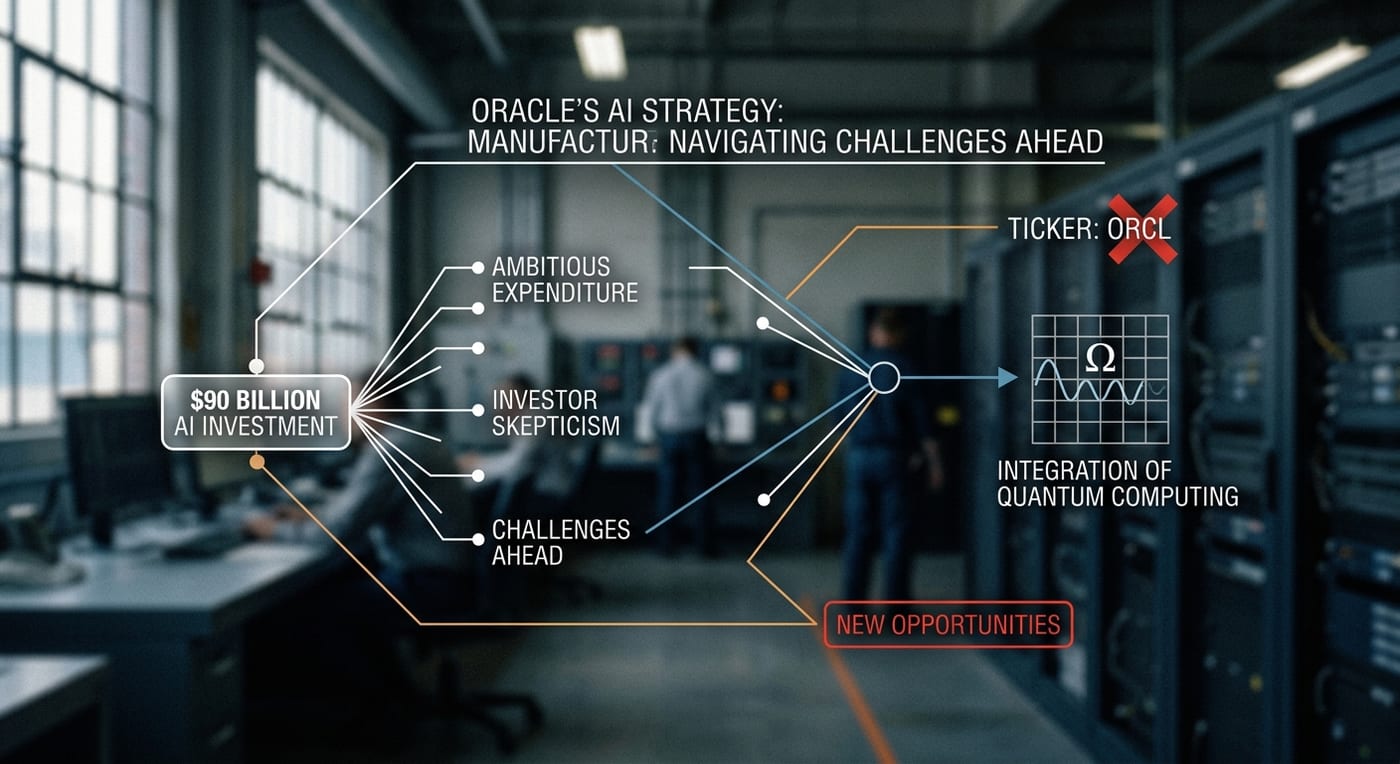
- Oracle's ambitious $90 billion AI investment raises concerns.
- Integration of quantum computing presents new opportunities.
- Investor skepticism remains a significant challenge for Oracle.
Oracle Corporation (ORCL) has embarked on an ambitious journey towards expanding its artificial intelligence (AI) capabilities. This strategic focus is not just an evolution of its existing cloud services but a multifaceted endeavor that promises to reshape the company's future. However, the path is riddled with challenges including declining stock prices, investor skepticism, and heavy financial commitments that could impact its operational stability. This article delves into the intricacies of Oracle's AI strategy, while also examining the broader implications for the company's profitability and overall market position.
The Mountain of Investment
Oracle's commitment to AI is monumental, with plans to allocate around $90 billion towards building a comprehensive AI infrastructure. This investment is poised as a double-edged sword, creating exciting opportunities yet introducing significant risk. As highlighted in previous discussions, Oracle's hefty spending raises concerns among stakeholders about whether the expected revenue growth will justify such expenditures. The company's stock has been under pressure, recently dropping to a 52-week low of $121.50, reflecting a staggering decline of approximately 65% from its peak of $345.72. This decline raises pertinent questions about Oracle's current strategy and its long-term sustainability.
Earlier reports indicated that Oracle secured a substantial $7 billion contract with the Pentagon aimed at streamlining military software services. While this achievement initially resonated as a major win, investors reacted with caution, reflecting uncertainties regarding the associated operational costs. Hence, while ambitious contracts may signal growth potential, they also highlight the need for a careful balancing of spending and profitability, an issue Oracle must navigate moving forward. Investors continue to scrutinize the implications of such large-scale commitments, worried about the financial ramifications and the potential for increased operational costs.
Facing Investor Skepticism
As Oracle paves its way into the AI frontier, skepticism runs high among investors. There is a palpable tension as stakeholders grapple with the implications of Oracle’s ambitious pursuit in the face of declining stock performance. Oracle’s aggressive AI investments are further complicated by recent credit rating downgrades, with rating agencies expressing concerns regarding its ability to manage the hefty financial commitments amidst fluctuating market dynamics. The current volatility emphasizes Oracle’s pressing need to provide clarity and reassurance to investors regarding its long-term growth prospects.
In a similar vein, it was noted that Oracle’s aggressive investment strategy forms part of a broader industry trend where companies face increasing scrutiny over spending versus return on investment. With a steady backlog of contracts, including significant engagements with high-profile clients, Oracle's potential for recovery hinges on its ability to optimize operations and demonstrate a clear path to sustained profitability. The upcoming months will be crucial in determining whether these investments will translate into tangible benefits that can quell investor concerns.
Integration of Quantum Computing
A promising development for Oracle is its partnership with Quantinuum to integrate hybrid quantum computing capabilities into its Cloud Infrastructure (OCI). This strategic move is designed to enrich Oracle's AI offerings, enabling OCI customers to leverage both traditional and quantum computing resources effectively. The partnership reflects Oracle's ambitious efforts to remain at the forefront of computational technology by integrating quantum capabilities that facilitate complex problem-solving beyond the reach of standard computing systems.
This initiative is more than a technological upgrade; it illustrates Oracle's concerted effort to create a comprehensive computational ecosystem that supports diverse applications spanning financial modeling to drug discovery. The integration of quantum and AI technology underscores Oracle's strategy to position itself as a leading provider of cutting-edge solutions while opening new avenues for enterprise clients seeking efficient computational resources. However, the success of such an ambitious integration will depend heavily on Oracle’s ability to manage the associated costs, particularly in the face of ongoing skepticism about its overarching AI strategy.
The Market's Reaction
The stock market has responded negatively to Oracle's aggressive moves, particularly as its massive investment plans coincide with lower-than-expected stock performance. Investors are wrestling with a landscape that feels increasingly uncertain, leading to broader discussions regarding the viability of Oracle's ambitious growth plans amidst a challenging macroeconomic backdrop. The heightened scrutiny surrounding Oracle’s operational costs, particularly in relation to its commitments, suggests a critical need for the company to provide firm evidence of market demand for the AI services it aims to deliver.
As mentioned in earlier discussions about Oracle's AI strategy, investor sentiment has shifted towards cautious optimism, driven by signs of strong demand yet tempered by concerns regarding financial sustainability. Ongoing developments within Oracle’s operational narrative will ultimately dictate the future trajectory of its stock price and overall valuation.
Conclusion: A Pivotal Moment for Oracle
Oracle stands at a significant crossroads as it navigates the complexities of its AI investment strategy. With the ambitious commitment towards AI and quantum computing integrated into Oracle Cloud Infrastructure, the potential for transformative growth exists. However, the lurking specter of declining stock prices and investor skepticism presents formidable challenges. It's a pivotal moment for Oracle to harness its technological advancements while reassuring stakeholders about its financial health and operational sustainability. Ultimately, whether Oracle successfully balances these dynamics will define its future as a leading player in the increasingly competitive tech landscape. The same pressure is reflected in recent reporting on the issue, which helps explain why the company's pricing decisions remain under scrutiny.