
Primoris Services' Ongoing Turmoil
ED
Editorial
Cashu Markets·3 min read
TL;DR
- Primoris Services faces leadership changes and lawsuits.
- Operational struggles lead to lowered earnings guidance.
- Class-action suits raise concerns over project management.
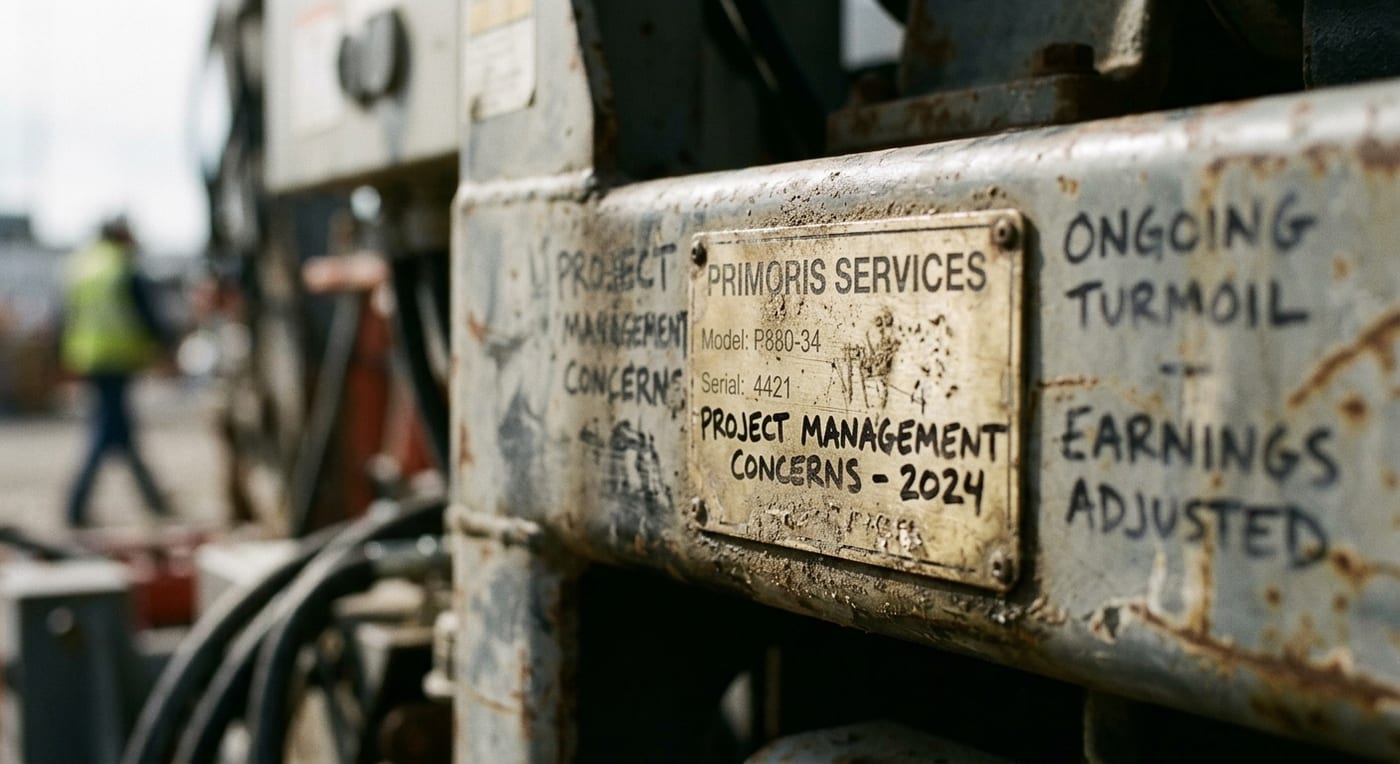
Primoris Services Corporation (PRIM) is currently experiencing significant turmoil characterized by leadership changes, operational difficulties, and heavy scrutiny from investors due to class-action lawsuits.
Leadership Changes and Investor Sentiment
The recent leadership shift at Primoris has raised eyebrows across the investor community. Despite its pivotal role in the renewable energy sector, the resignation of key executives—including the Chief Operating Officer Jeremy Kinch and the President of Renewables Anthony Vorderbruggen—has deeply unsettled investors. In July 2026, the company appointed Tim Healy as interim president, a move the board hopes will stabilize its operations and restore investor confidence amidst a spiraling situation.
Investors' concerns have been magnified by the ongoing class-action lawsuits stemming from allegations of mismanagement and insufficient disclosure regarding the risks associated with fixed-price renewable energy projects. According to claims detailed in legal documents, these projects suffered from systematic cost overruns and execution delays that had not been disclosed earlier.
Operational Struggles in the Energy Segment
Primoris has faced operational challenges primarily within its Energy segment, including adverse weather impacting project timelines and labor shortages. The convergence of these issues has forced the company to reduce its earnings guidance significantly.
On June 22, 2026, following an internal review that identified numerous obstacles affecting project delivery, Primoris stated it would lower its Adjusted EPS guidance to between $2.05 and $2.60, down from previous estimates of between $4.80 and $5.00. This revelation was met with immediate skepticism by the market, leading to a significant drop in the company's stock price.
At the core of these operational struggles lies the increasingly competitive landscape in renewable energy, where margins are being compressed due to oversupply and rising input costs. Furthermore, the industry must navigate a complex regulatory framework, making efficient financial management crucial for successful project execution. That backdrop echoes earlier coverage of the issue, especially around how pricing, strategy, and demand feed into the current story.
Legal Scrutiny and Class-Action Lawsuits
Amidst the financial turmoil, a series of class-action lawsuits have been initiated against Primoris, alleging securities fraud and failure to disclose material facts about its renewable energy projects. According to a recent article, these lawsuits have emerged as a response to disclosures about cost overruns and construction delays that were not adequately communicated to shareholders in a timely manner.
One notable lawsuit, led by the Boston Retirement System, accuses Primoris executives of misleading investors about the company's project risks and profitability prospects. Investors affected during the class period, from August 5, 2025, to June 22, 2026, may be eligible for compensation, which casts a further shadow on Primoris's already dented reputation.
Future Outlook and Strategic Reassessment
As Primoris navigates through these choppy waters, a strategic reassessment seems imperative. The current leadership under Tim Healy is tasked with not only stabilizing the company but also with formulating a long-term strategy that will address the operational pitfalls seen within the Energy segment.
The company needs to articulate a clear pathway for recovery, focusing on transparency to rebuild investor trust. This aims to alleviate fears associated with ongoing lawsuits and operational inefficiencies.
In conclusion, Primoris Services Corporation is poised at a critical juncture. With leadership in transition, ongoing operational struggles, and significant legal challenges, the path ahead is rife with uncertainties. How the company addresses these multifaceted issues will likely dictate its future course and the potential restoration of investor confidence. The same pressure is reflected in recent reporting on the issue, which helps explain why the company's pricing decisions remain under scrutiny.