
Hertz Global Holdings: Navigating Financial Challenges
ED
Editorial
Cashu Markets·4 min read
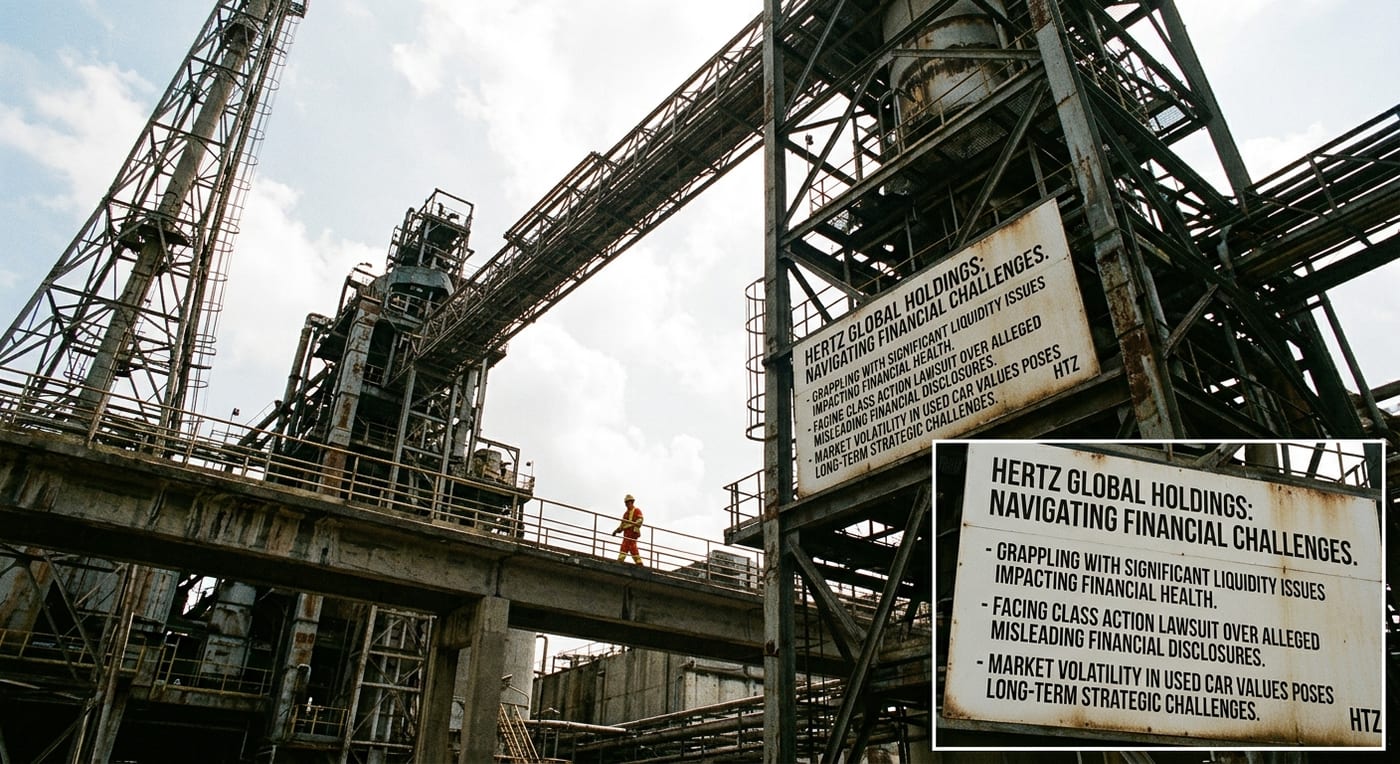
TL;DR
- Hertz is grappling with significant liquidity issues impacting its financial health.
- The company is facing a class action lawsuit over alleged misleading financial disclosures.
- Market volatility in used car values poses long-term strategic challenges for Hertz.
Hertz Global Holdings, Inc. ( HTZ) is currently facing a precarious financial landscape marked by liquidity constraints, ongoing legal issues, and challenges posed by fluctuations in the used car market. These overlapping challenges have significant implications for the company, its investors, and its operational strategies. Having emerged from bankruptcy, Hertz had hoped to stabilize its path forward, but unforeseen market conditions and declining vehicle values have turned this hopeful trajectory into one filled with uncertainty.
Overview of Financial Strain
In recent months, Hertz has found itself grappling with considerable liquidity challenges. These difficulties have been exacerbated by an unexpected downturn in the used car market, where values have fluctuated more dramatically than previously anticipated. As noted in earlier insights, rising used car prices initially seemed beneficial to Hertz's fleet valuation. However, the recent decline in these values has raised alarm among investors and market analysts, prompting concerns regarding the company’s actual financial health. Reports suggest that Hertz’s liquidity is deteriorating at a faster rate than disclosed, intensifying scrutiny from shareholders and increasing the pressure on executive leadership to address these financial realities.
The company's liquidity issues were further highlighted on June 24, 2026, when Hertz unveiled a significant capital raise shortly after reassuring investors of sufficient liquidity for operational needs. This announcement inevitably dampened investor confidence, leading to a steep decline in the share price, further complicating Hertz’s financial situation. Investors had previously been assured that the company would maintain over $1.5 billion in liquidity; however, the simultaneous acknowledgment of a softer used car market painted a different picture, one that was met with skepticism and criticism from both investors and financial analysts. For further details on these events, earlier discussions can be referenced in this prior article
that thoroughly examined Hertz's struggles with liquidity.
Legal Troubles Haunting Hertz
Hertz is not only dealing with financial pressures but is also embroiled in ongoing legal challenges. The company is currently facing a class action lawsuit claiming that it misled investors about its financial health, particularly concerning liquidity and market forecasts. With allegations surfacing that earnings and operational capabilities were inaccurately presented, the lawsuit has drawn increased attention to the company's financial disclosures. The claims suggest that leading members within Hertz anticipated a rapid deterioration of liquidity yet continued to assure investors of better conditions.
The potential impacts of this legal burden extend beyond immediate financial penalties; they could destabilize the corporate image that Hertz is trying to rebuild after emerging from bankruptcy. Legal challenges of this nature can divert resources and management focus away from core operational strategies, further complicating the path to recovery. Additionally, as the company wrestles with reputation management amid declining stock prices, the financial ramifications of the class action lawsuit could prove detrimental, making a comprehensive reassessment of communication to stakeholders paramount as highlighted in a related article discussing the impact of class action lawsuits on firms navigating liquidity crises
(see here).
Market Conditions and Future Outlook
The broader market conditions pose their own set of challenges for Hertz. The previously robust demand for rental vehicles began to falter, compounded by rising interest rates and economic uncertainties that discourage consumer spending. The result is a slowdown in business, traditional for rental companies during market downturns. With revenue streams affected, the pressure on Hertz to adjust pricing strategies becomes more pronounced, leading to potential margin compression.
Hertz's management faces the dilemma of balancing competitive pricing while preserving profitability. As alternative mobility solutions continue to evolve alongside traditional car rental models, adapting to consumer preferences and market trends becomes critical. For instance, partnerships with rideshare companies offer opportunities to diversify service offerings, yet may also strain existing operational frameworks if not managed adeptly. Given these dynamics, the consideration of strategic pivots, market adaptability, and investor reassurance about financial transparency will be essential.
Conclusion
In conclusion, Hertz Global Holdings, Inc. is situated at a critical juncture. As liquidity pressures mount, and legal issues loom over its head, the company faces not only internal challenges but also extensive scrutiny from the market. The interplay between declining used car values and the absence of robust financial guidance has raised serious concerns among investors, as has the revelation of overestimating its liquidity position. The necessity for clear, accurate communication and robust strategic adjustments is more critical now than ever in preserving Hertz's financial health. The ongoing situation compels critical monitoring as the implications for stakeholders are significant, and the company must navigate these troubled waters with agility and transparency to foster a recovery and regain investor trust. The same pressure is reflected in recent reporting on the issue, which helps explain why the company's pricing decisions remain under scrutiny.