
Netflix's Strategic Maneuvering in a Competitive Era
ED
Editorial
Cashu Markets·5 min read
TL;DR
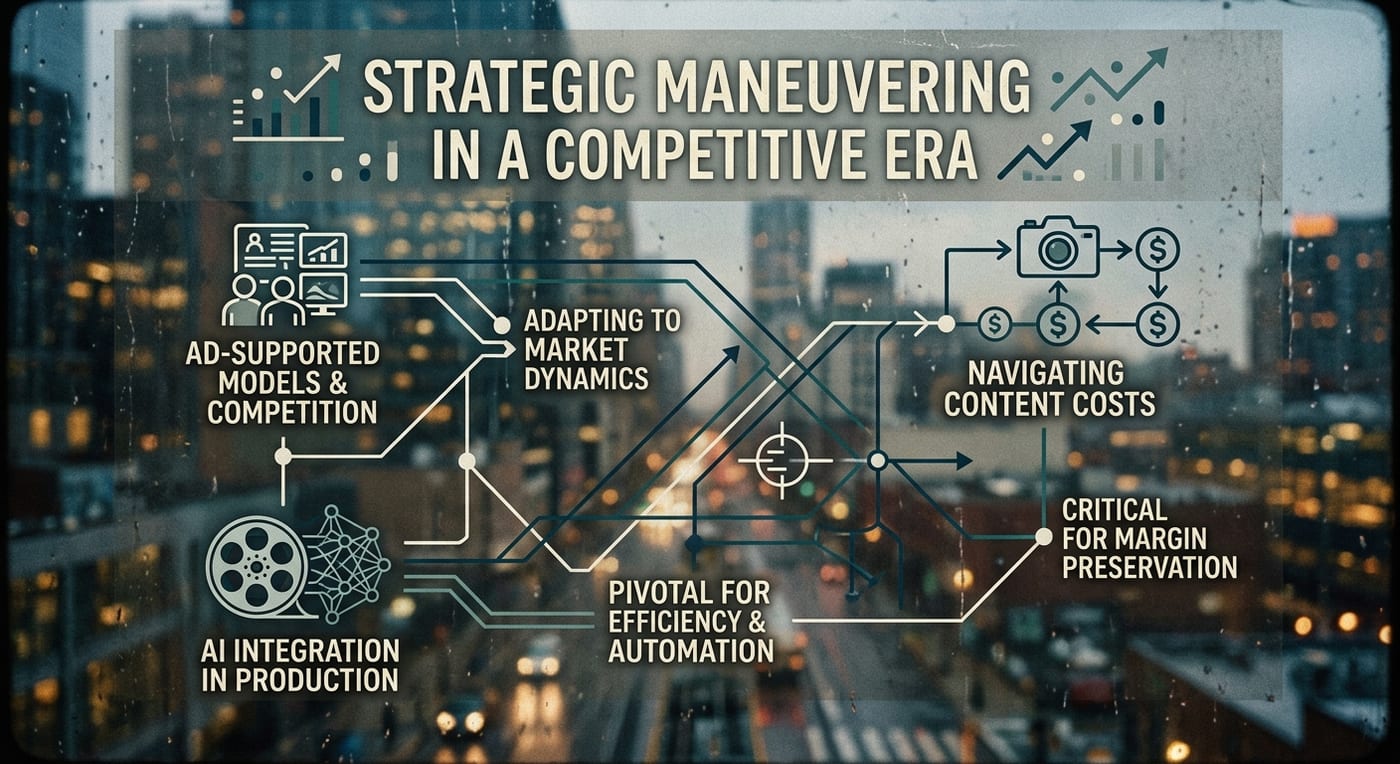
- Netflix adapts to competition through ad-supported models.
- AI integration is pivotal for content production efficiency.
- Navigating content costs is critical for margin preservation.
Netflix, Inc. (NFLX) is drawing attention as the latest developments come into focus. Netflix, Inc. (NFLX) is navigating a complex landscape as competition escalates and viewer preferences shift. The streaming giant, once synonymous with revolutionary content delivery, is facing headwinds that require bold adaptations to maintain its market position. Current challenges include fluctuating stock performance, heightened competition from media conglomerates, changing consumer engagement, and the ever-increasing costs of content production. In its latest earnings report, Netflix revealed a record quarterly revenue of $12.56 billion, marking a 13% increase year-over-year. However, this fell slightly short of market expectations. These results reflect broader concerns about the company’s future growth prospects, especially in the face of new entrants such as Disney and Amazon, which have ramped up their streaming offerings. To counter these pressures, Netflix is pivoting to an ad-supported model, enhancing its content library through strategic partnerships, and integrating artificial intelligence in its operations. As these changes unfold, how will they impact Netflix’s ability to sustain growth amidst rising challenges?
Performance Snapshot
In the second quarter of 2026, Netflix reported a modest increase in net income of over $3.4 billion but failed to meet investor expectations, which predicted slightly higher revenues. This performance has not only impacted stock prices but has also drawn attention to the underlying issues affecting Netflix, notably a subscriber growth rate that is slowing down. In particular, the company saw its stock drop nearly 9% in after-hours trading immediately following the earnings report, highlighting vulnerabilities that investors are keenly aware of.
Notably, Netflix's most recent earnings call indicated that the company expects to generate approximately $12.86 billion in revenue for the third quarter, showing cautious optimism yet hinting at the challenges it could face in achieving that target. The investors now recognize the pattern that much of Netflix’s revenue growth is becoming increasingly reliant on price increases rather than organic subscriber growth.
Competitive Landscape
Netflix is intensifying its arms race against competitors in the streaming industry. Traditional networks like Disney + are launching increasingly aggressive content strategies and rolling out innovative features to capture subscribers' attention, thereby reshaping the competitive environment for Netflix. In previous articles, we discussed how Netflix's former strategies have placed it into turbulent waters, especially as it faces a backdrop of rising content costs and market share loss to major players. The company's approach is now critical: it must solidly differentiate itself in a crowded marketplace, leveraging consumer engagement and viewer preferences to stay ahead. The significant decline in Netflix’s stock by 24% during the first half of 2026 is a telling sign of this downward trajectory amidst increased competition.
Emphasis on Ad-Supported Models and AI Integration
One of the most significant shifts in Netflix’s strategy has been its foray into ad-supported subscriptions, aimed squarely at enhancing revenues while providing a more affordable entry point for prospective subscribers. By adopting this model, Netflix looks to broaden its audience base and facilitate smoother integration of advertising revenue streams. Moreover, the ad-supported model aligns with management’s efforts to diversify income sources, which is a response to the dual pressures of market volatility and rising content costs.
Interestingly, recent discussions at Netflix highlight an emphasis on AI fluency across the workforce. Elizabeth Stone, Netflix's Chief Product and Technology Officer, stated the company is encouraging all employees to become more familiar with AI technologies. This move aims not only to optimize current processes but also to foster a culture of innovation that is pivotal as the company explores areas such as automated content production and enhanced consumer experiences through AI-driven assets. The integration of AI could herald significant cost savings in production, although it remains to be seen how rapidly these efficiencies will materialize.
Balancing Growth and Margins
Amidst these strategic shifts, Netflix has continued to face scrutiny concerning its ability to manage content costs effectively. Estimates indicate that investments in content could lead to operating margins being preserved at about 31.5% for the full year, showcasing a strong operational backbone. Furthermore, while revenue growth of 13% year-over-year paints a positive picture, it has not escaped investor concern due to insights suggesting that competition is increasingly limiting growth potential.
Netflix must also consider the critique from notable investors, like Michael Burry, who argue that Netflix's content lacks the durability and legacy witnessed in established franchises from competitors. The notion that Netflix creates content that merely serves immediate consumer demands rather than lasting fan bases could severely limit its potential for sustainable growth, making it essential for the company to critically evaluate its content strategies moving forward.
Conclusion: Navigating the Road Ahead
As Netflix navigates these complex challenges, its adaptability will be critical. Tapping into advertising revenues, leveraging AI technologies, and exploring high-profile sports content are vital components of its revised strategy. The stock performance and market reactions underscore a nuanced investor sentiment—the potential for growth exists, but there are significant hurdles to clear. Strengthening relationships with advertisers while continuing to invest in high-quality content may just allow Netflix to reclaim its momentum amidst a rapidly changing landscape. Ultimately, maintaining this balance while keeping pace with the dual pressures of competition and content costs will determine Netflix's trajectory in the near future, as the company attempts to redefine its identity in an era that can no longer tolerate complacency. The same pressure is reflected in recent reporting on the issue, which helps explain why the company's pricing decisions remain under scrutiny.