
Navigating Gold's Current Landscape
ED
Editorial
Cashu Markets·5 min read
TL;DR
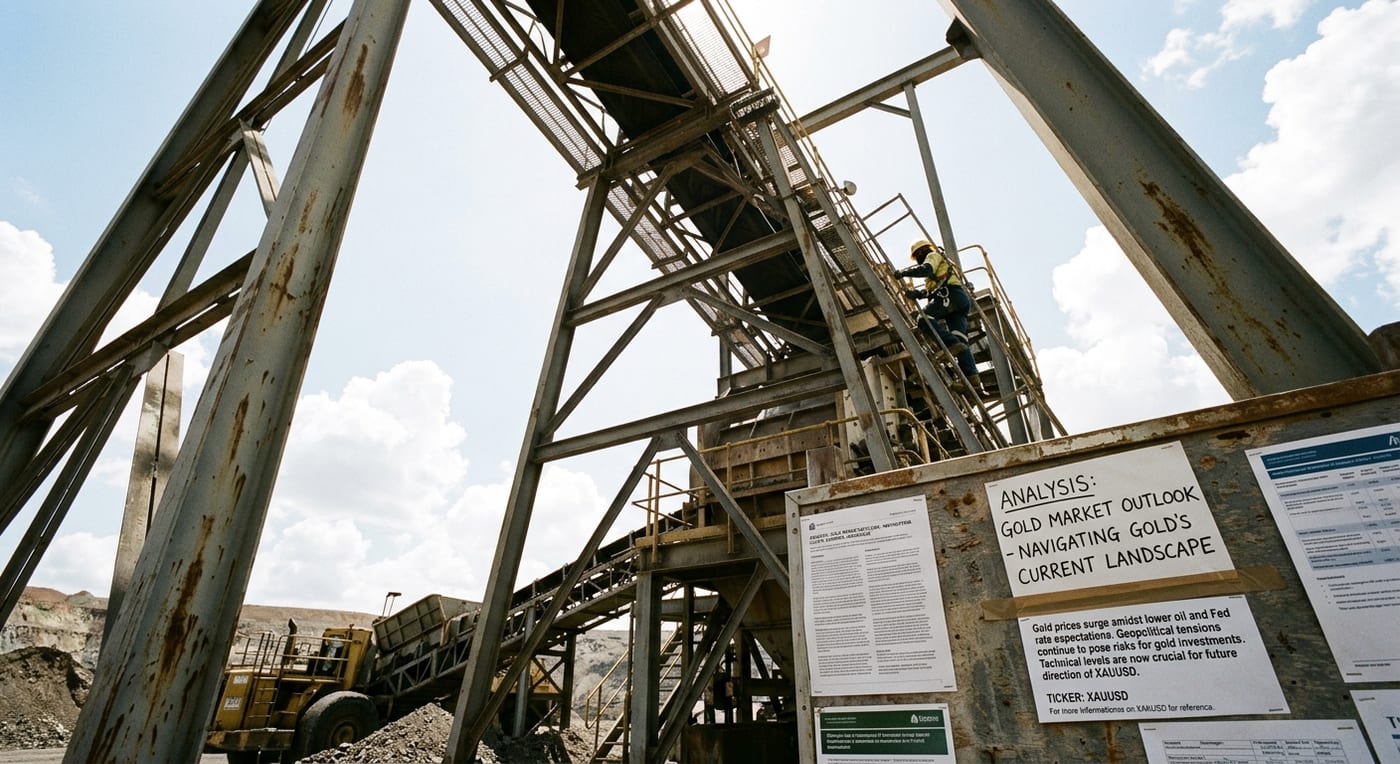
- Gold prices surge amid lower oil and Fed rate expectations.
- Geopolitical tensions continue to pose risks for gold investments.
- Technical levels crucial for future direction of XAUUSD.
Gold (troy ounce) / U.S. Dollar (XAUUSD) is experiencing significant volatility, driven by a complex interplay of market dynamics including geopolitical tensions, evolving economic indicators, and Federal Reserve policies. The recent performance of gold showcases both the strength and challenges faced by this precious metal, reflecting broader investor sentiment and expectations.
The price of gold has recently surged to a seven-week high, triggered by a combination of lower oil prices and reduced odds of interest rate increases by the Federal Reserve. This has drawn rate-sensitive investments back into the gold market, a trend that underscores the current appetite for safe-haven assets amidst an uncertain economic backdrop. As highlighted previously, geopolitical tensions play a vital role in influencing gold pricing, acting as a catalyst for increased investor interest in gold during times of conflict and financial instability.
Market Dynamics and Influences
The gold market is particularly responsive to fluctuations in oil prices, which have a dual impact. Recent discussions regarding a potential deal involving shipping routes through the Strait of Hormuz have contributed to lower crude prices, alleviating inflationary pressures that historically drive gold prices higher. With the U.S. dollar remaining near a six-week low, gold has benefitted from increased demand, allowing it to reclaim a position above critical technical levels, including the key resistance area spotted around $4,375-$4,381. If gold manages to close above this range, it may pave the way for further upside potential, drawing attention toward $4,500-$4,525, as technical indicators remain favorable for buyers.
Moreover, investor sentiment is heavily influenced by news and reports regarding the Federal Reserve's monetary policy stance. As seen in the recent drop in the odds of a September rate hike from 67% to 55%, shifts in market expectations can lead to rapid movements in gold pricing. This relationship is crucial, as any strengthening of the labor market or inflation indicators could significantly impact the Fed's decision-making, thus influencing gold prices in real-time. The upcoming labor market data is poised to be a decisive factor for the future direction of XAUUSD, further complicating an already intricate market scenario.
The Role of Geopolitical Tensions
Continued geopolitical tensions, particularly in regions such as the Middle East, are pivotal in shaping gold investment trends. For instance, recent developments surrounding Iran and their implications on oil supply have heightened market anxiety, which typically supports the performance of gold as investors seek refuge from potential systemic risks. However, as pointed out in prior analyses, while gold may initially rally during times of crisis, sustaining such momentum often hinges on broader economic realities and the ability of investors to recalibrate their expectations based on evolving circumstances.
The interplay between oil market dynamics and gold performance reflects a broader trend observed in past analyses, where fluctuations in crude often foreshadow movements in safe-haven assets. With the significant importance of geopolitical climates in determining price action, investors remain vigilant about potential developments that could disrupt the delicate balance currently benefiting gold. Any indication that oil prices might rebound, fueled by stalled diplomatic talks or renewed tensions, could reintroduce inflation concerns into the market, thereby influencing the yield expectations for Treasury securities and the dollar.
Technical Analysis and Future Outlook
Analyzing technical charts reveals that gold has previously faced downward pressure, struggling to maintain highs in light of conflicting economic signals. The regained market position has led to a shift in sentiment, with bullish indicators suggesting opportunities for upward movement. Moving averages and established price ranges will be crucial as the market approaches key decision points.
If gold can sustain its position above the upper boundary of the declining channel at $4,381, it would signal a stronger bullish trend, opening the door to test higher levels. Traders and investors are advised to monitor not just the price of gold, but also the movement in the U.S. dollar index, which often mirrors investor sentiment toward gold. A bullish reversal in the dollar could set off a cascading effect that might jeopardize gold's recent gains.
Moreover, as Friday approaches, all eyes are set on the forthcoming payrolls report, which could usher in fresh volatility. Labor market strength typically ignites discussions around monetary policy adjustments, influencing how gold and other assets respond. It’s crucial to remember that sharp shifts in the landscape can occur as the market reacts to new information, making it paramount for investors to stay attuned to economic signals.
Conclusion
As XAUUSD navigates through this tumultuous landscape, it is essential to appreciate the multifaceted influences at play, from geopolitical tensions to shifts in Federal Reserve policy and changes in oil prices. The interplay of these factors will dictate the extent and sustainability of gold's recent price movements.
In a climate marked by uncertainty and rapid changes, gold continues to be a focal point for investors seeking to hedge against economic instability. As we edge closer to significant economic reports, the outlook for gold remains cautiously optimistic, contingent upon adherence to critical technical levels and market responses to unfolding global conditions.