
Roblox's Age Verification Crisis Impact
ED
Editorial
Cashu Markets·5 min read
TL;DR
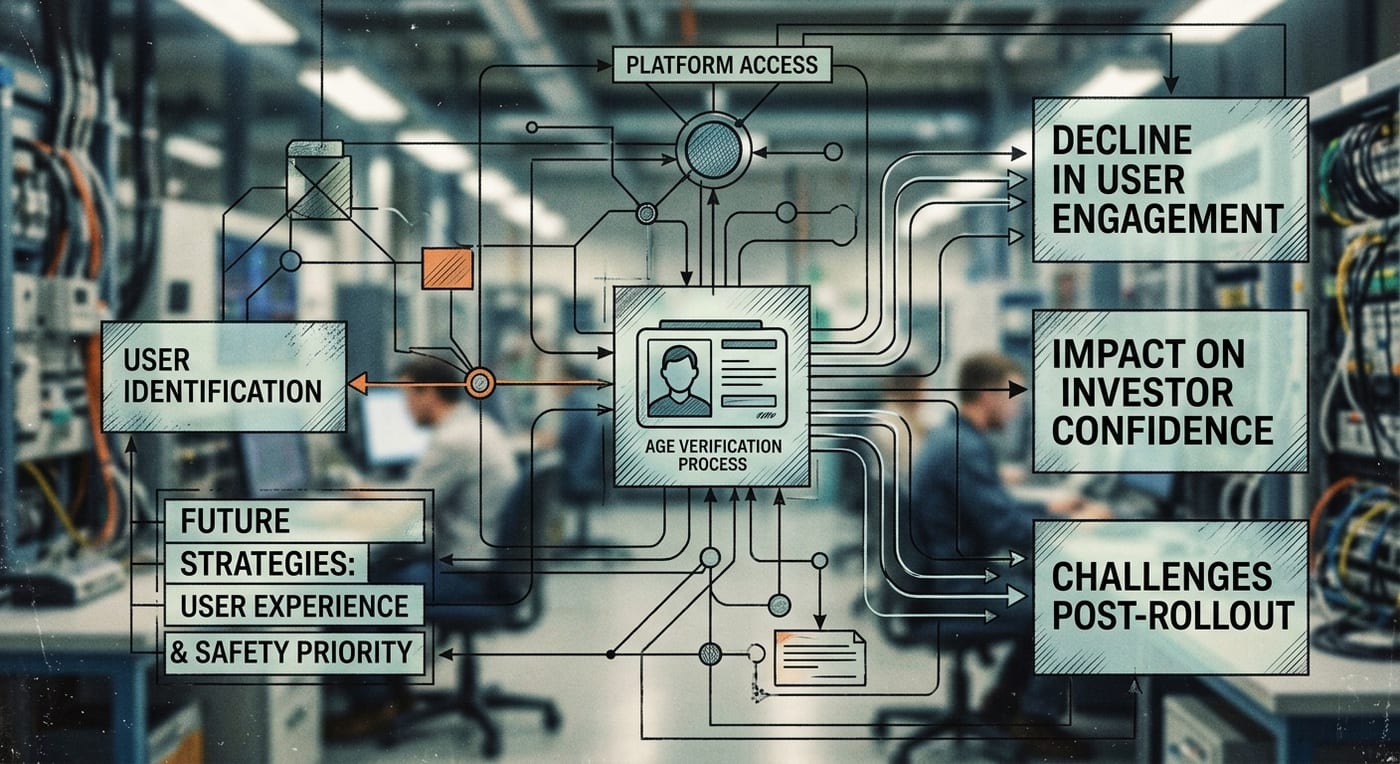
- Roblox faces significant challenges post-age verification rollout.
- User engagement and investor confidence have sharply declined.
- Future strategies must prioritize user experience and safety.
Roblox Corporation ( RBLX) is currently navigating a tumultuous period following the rollout of its age verification system, which has had significant repercussions on user engagement and investor confidence. The initiative, heralded as a key enhancement to user safety, has inadvertently provoked a crisis that has affected the company's operational dynamics.
Missteps in the Age Verification Rollout
In early 2026, Roblox introduced its much-anticipated age verification system, designed to provide a safer online environment for its primary user demographic — children and teenagers. Initially framed as the 'gold standard' for online safety, the expectation was that the new system would promote user trust and enhance engagement. However, the reality soon became apparent: only 51% of daily active users adopted the system shortly after its launch. This significant shortfall in engagement highlights the cumbersome nature of the verification process, which served more as a barrier to entry rather than a facilitator of safety.
As a consequence, user engagement took a notable hit, with the total daily active users dropping to 132 million in Q1 of 2026, down from a peak of 152 million in Q3 2025. The decline in user hours spent on the platform similarly fell from 40 billion to 31 billion, implying that the crackdown on safety protocols has effectively discouraged both new and existing users from participating in the platform.
These trends correlate with earlier discussions about Roblox's strategic direction and the challenges of adapting to a post-pandemic play environment. The reliance on viral gaming experiences and younger audiences, amplified during the pandemic's peak, has proven to be a precarious business model in an evolving gaming landscape.
Investor Sentiment Takes a Nosedive
As user engagement began to falter, investor sentiment turned sharply negative. By May 2026, Roblox's stock price plummeted by approximately 18% within a single trading day, reflecting a staggering loss of around $6.7 billion in market capitalization. This decline has raised serious concerns among stakeholders regarding the sustainability of Roblox's business model, particularly under the pressures of expanding infrastructure costs and necessary compliance mandates associated with its new verification process.
Investor dissatisfaction culminated in multiple class-action lawsuits alleging that Roblox misled its shareholders about the impact of the age verification initiative. Founded on the premise that Roblox's leadership failed to adequately communicate the risks inherent in the verification rollout, these lawsuits assert that the management's overconfidence in their growth trajectory was unfounded. The described missteps not only emphasize the need for transparency but also expose the risks associated with over-reliance on viral trends for growth.
Pricing and Profitability Concerns
With a market cap of approximately $34 billion, Roblox's revenue model is heavily dependent on the sale of its in-game currency, Robux, alongside emerging advertising revenues from integrated videos and in-game promotions. This model had served the company well during the pandemic; however, with user numbers now dwindling, questions are looming regarding profitability and overall financial health. Analysts anticipate an 11% year-over-year revenue growth for its upcoming second-quarter earnings. Yet, as history shows, past growth patterns do not guarantee future success. The company's long-term sustainability remains uncertain if the decline in user metrics continues.
Roblox must ultimately demonstrate that it can attract and retain a diverse user base beyond the current demographic that dominated earlier growth periods. Without effectively addressing user experience concerns and reinforcing engagement, Roblox's pursuit of profitability looks increasingly elusive.
Strategies for Rebuilding Trust and Engagement
Moving forward, Roblox will need to devise comprehensive strategies that not only reinforce user safety but also encourage more seamless engagement with its platform. One viable direction could involve revisiting the age verification process itself. Simplifying the verification procedure may be critical in re-establishing confidence among users and stakeholders alike—and crucial for restoring investor sentiment as well. A balance must be struck between rigorous safety measures and user accessibility.
Efforts to engage older and international users could also play a pivotal role in broadening the platform's audience. Companies in the gaming sector are increasingly recognizing the value of expanding demographic outreach, especially as new trends and technologies emerge in the industry.
Conclusion
Roblox Corporation's journey in 2026 serves as a cautionary tale of the delicate balance between user safety and user engagement. The age verification system's rollout, initially seen as a boon for user protection, has manifested serious flaws that have impacted not only user engagement but investor confidence as well. Only time will tell if Roblox can recover from this setback and adapt its strategies to ensure a stable and engaging platform for all users. The stakes are high, and the pressure mounts for the company to reclaim its standing in the competitive gaming landscape. The same pressure is reflected in recent reporting on the issue, which helps explain why the company's pricing decisions remain under scrutiny.